Couples Worksheets (Printable)
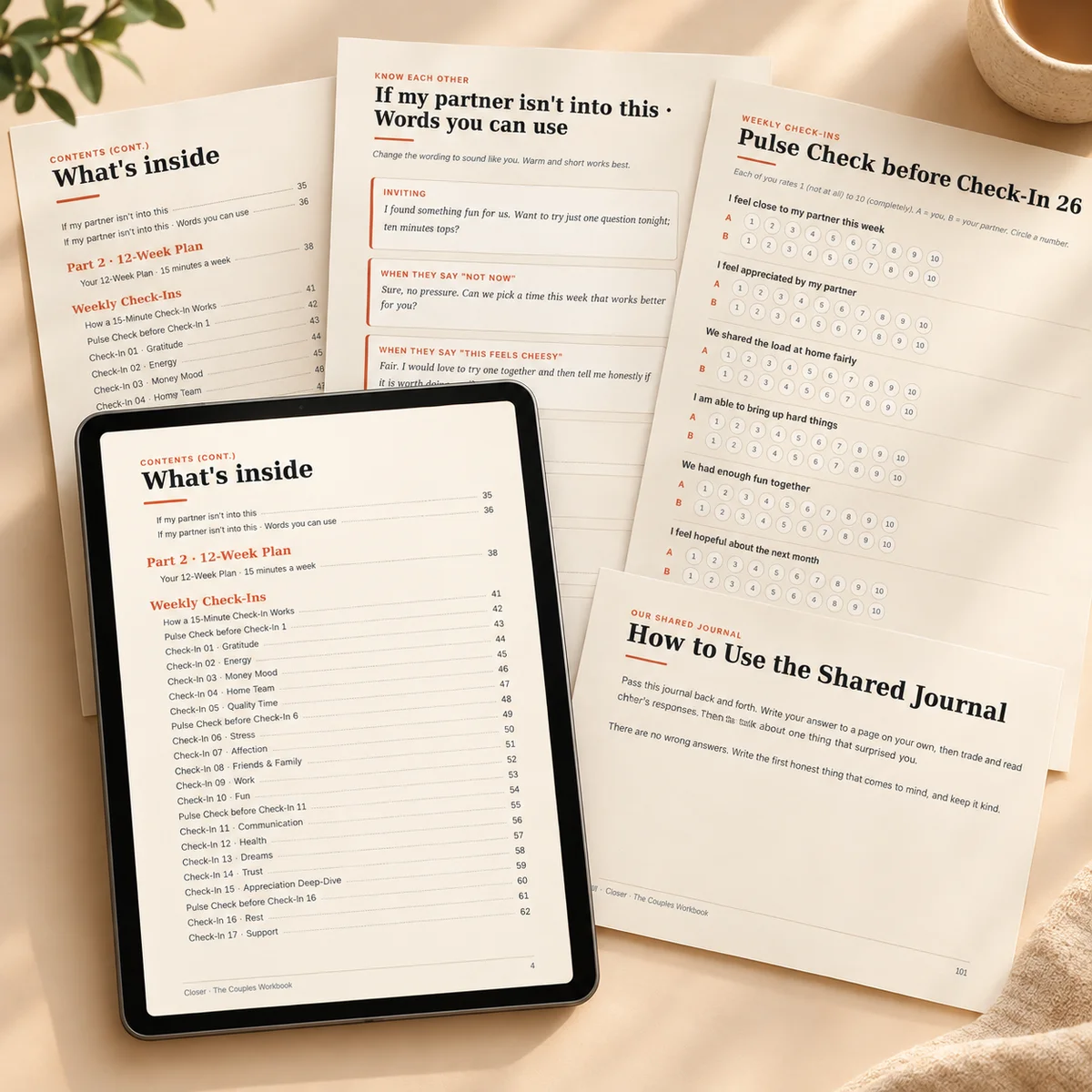
Printable couples worksheets work best when each one has a clear purpose, takes 15 minutes or less and ends with something you will actually do. Below are seven types worth knowing, what each is for and how to use it. You can build your own on paper from the outlines, or use a ready-made set.
1. Weekly check-in sheet
Purpose: Keep small issues small and give each other regular attention. Here is a free sample of the weekly check-in sheet from the workbook, ready to print.
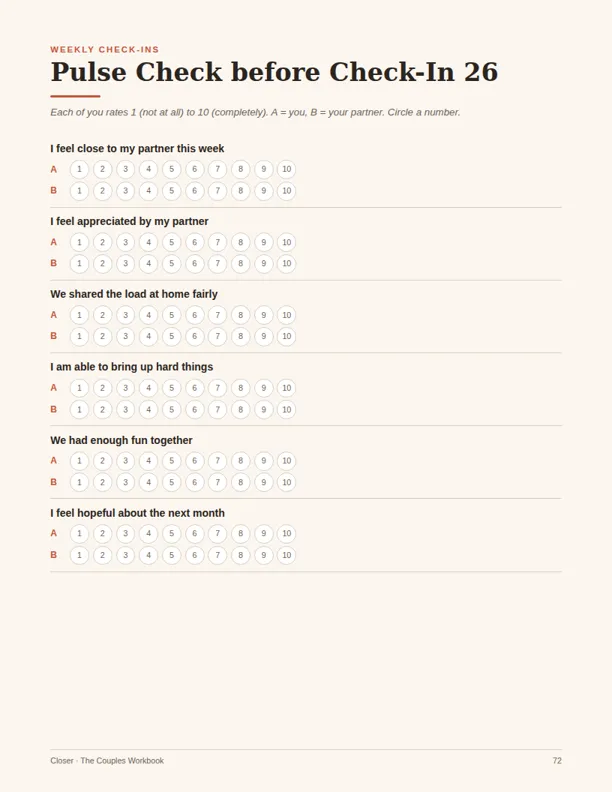
Typical fields: date; a closeness rating from 1 to 10 for each of you; two appreciations; one win; one challenge; one request; one thing to try.
How to use it: Fill in the top part on your own for two minutes, then talk through it. Keep the sheets in a folder and glance back monthly to see patterns. Read more in relationship check-in questions.
2. Ground rules and agreements sheet
Purpose: Agree on how you'll talk, especially in disagreements.
Typical fields: our rules for talking (for example, no interrupting, phones away); how we'll pause; how we'll return; what each of us needs in a hard moment.
How to use it: Fill in separately, compare and merge into one list that you both sign if you like. Put it somewhere visible.
3. Conversation question pages
Purpose: Get to know each other more deeply.
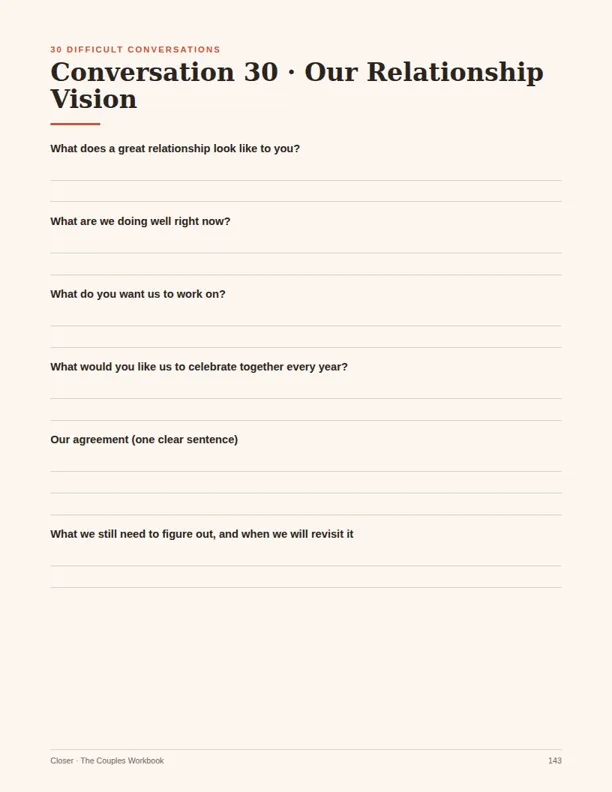
Typical fields: a theme (childhood, family, money, the future), a list of questions and lines to write.
How to use it: Choose three questions and answer them in writing before you talk, so quieter partners have time to think. Our list of couples questions to ask each other can help.
4. Money worksheets
Purpose: Talk about money without blame.
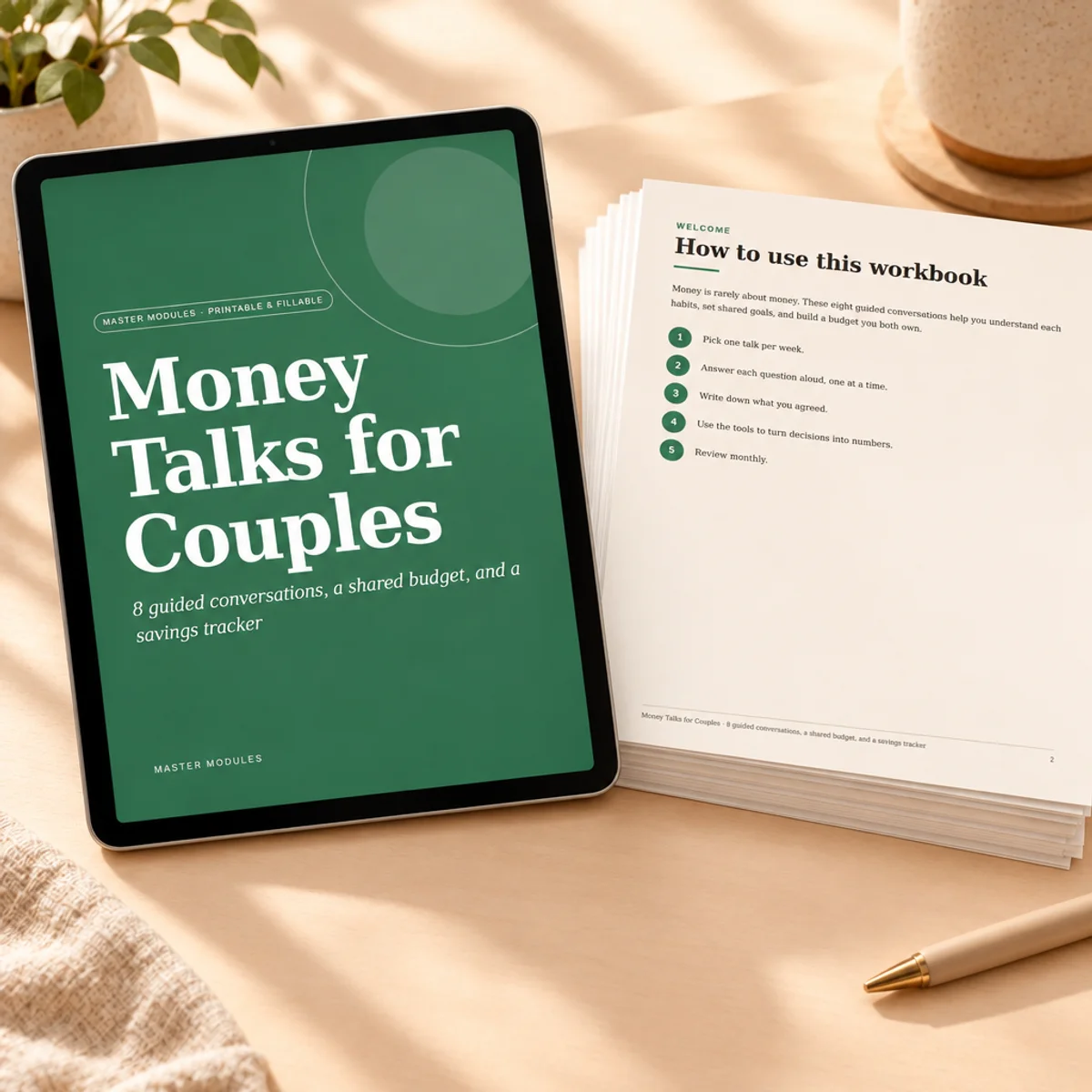
Typical fields: shared goals; monthly income and spending categories; yours, mine and ours rules; a savings tracker for one goal.
How to use it: Fill in the facts, then discuss feelings and priorities. Keep them as planning tools, not financial advice. See how to talk about money with your partner.
5. Appreciation and connection sheets
Purpose: Make noticing the good a habit.
Typical fields: three things I appreciated this week; a memory I want to keep; a note to leave for my partner.
How to use it: Write one every day or every week and swap. Cut-out cards work well for leaving on a pillow.
6. Fair-fight and debrief sheets
Purpose: Learn from conflict.
Typical fields: what I was feeling; what I needed; what triggered me; what I'd do differently; one change we'll try.
How to use it: Fill in separately within a day of a disagreement, then talk. Keep the tone curious. For more, see couples communication exercises.
7. Goal and bucket list planners
Purpose: Turn dreams into dates.
Typical fields: ideas by category; the top 12 for the year; who plans each; a date; a memory section.
How to use it: Fill in as a list, pick one for each month and review quarterly.
What makes a good worksheet
| Look for | Why |
|---|---|
| One purpose per page | Easier to finish |
| Short, clear prompts | Less pressure |
| Room to write | Makes it personal |
| A final action | Moves from talk to change |
| Neutral, kind language | Lowers defensiveness |
What to avoid
- Worksheets that read like tests. Nothing here should be a test you can fail.
- Over-long forms. If it takes an hour, it won't happen weekly.
- Sheets that diagnose. Be wary of any worksheet that claims to diagnose your relationship.
- Using sheets as evidence in an argument. Agree they're for understanding, not for scoring points.
Printing and using tips
- Print on standard paper or card stock for cards.
- Keep a folder or binder for the completed pages.
- Use a pen you like. It sounds small, but it helps.
- Sit side by side rather than across a table, which feels less confrontational.
- If printing isn't convenient, fill in the PDF on a screen.
A full set instead of single sheets
Closer — The Couples Workbook is a printable workbook that combines most of these types: a first-conversation page and ground rules, 112 conversation questions with writing lines, the Intimacy Map scales, a Love Styles mini-test, 30 weekly check-ins with pulse checks, a Fight Better section with a rules page and a debrief sheet, a shared journal and 30 difficult conversations with space for agreements. The bonuses add Money Talks for Couples with a shared goals sheet, a monthly budget and a savings tracker, Our Couples Bucket List with a 12-month planner and memory sheets and 120 appreciation cards. The Closer app is included. See what's inside the couples workbook and do couples workbooks work for more detail.