Do Couples Workbooks Work?
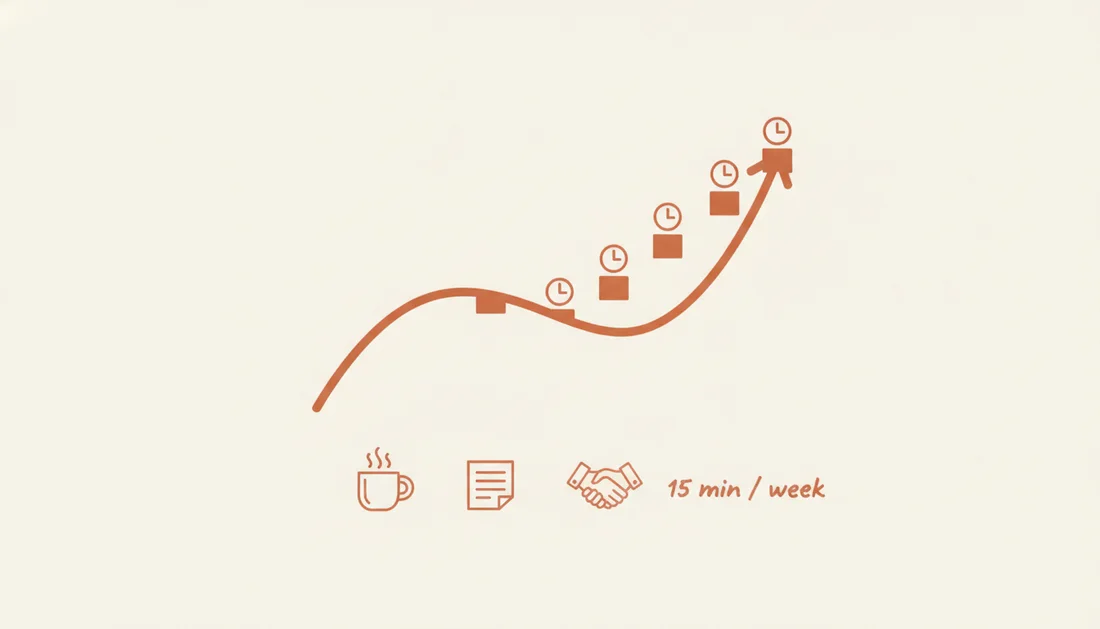
Couples workbooks can help couples build habits such as regular check-ins, gentler conversations and shared planning, but they work only if you use them, and they are not a substitute for professional help. There is no guarantee that a workbook will change your relationship. This page explains what the evidence and common sense say, what a workbook can and can't do and how to get the most from one.
What the research suggests, in plain terms
Research on couples, including work by John Gottman and others, points to a few habits that tend to go with healthier relationships: starting difficult talks gently, repairing after conflict, noticing and appreciating each other and making time for regular connection. A workbook is a way to practice those habits with prompts and structure. No workbook is guaranteed to work, and studies of self-help formats vary in quality, so treat any strong claims with caution. What you can say with confidence is that practicing useful habits is more likely to help than hoping the habits appear by themselves.
What a workbook can do
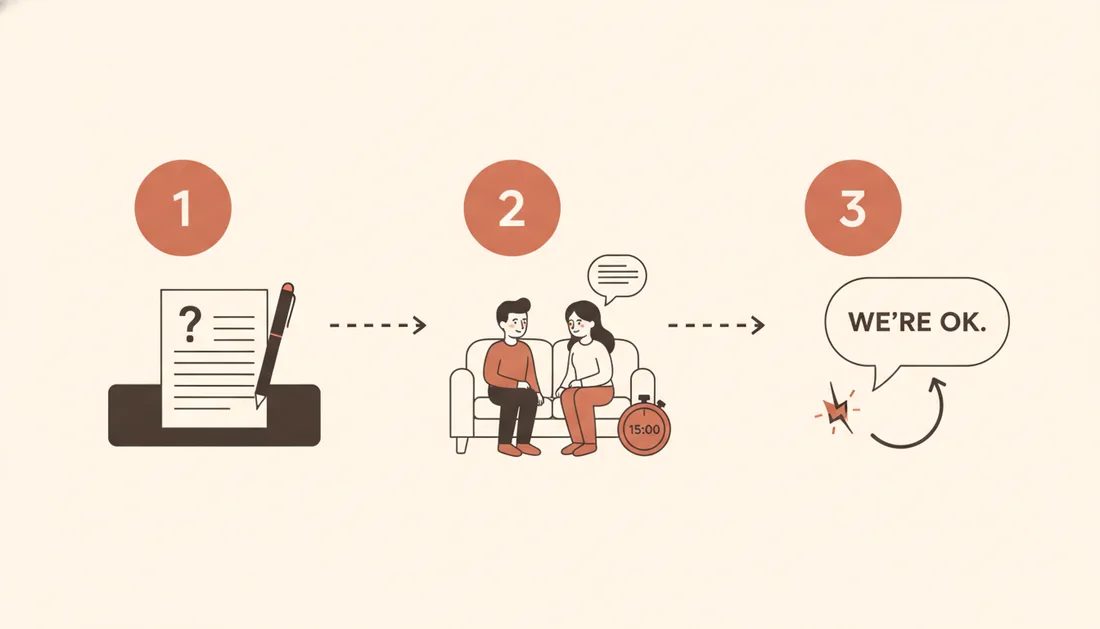
- Give you a starting point. "We should talk more" is vague. A page with a question and a time limit isn't.
- Lower the pressure. Prompts mean neither of you has to invent topics.
- Create a routine. A weekly 15-minute slot is easier to keep than a vague intention.
- Make hard topics easier to raise. Writing and structure give words to topics like money, chores and in-laws.
- Offer scripts. Having a phrase for pausing, apologizing or restarting can help when emotions are high.
- Leave a record. Written answers show progress and patterns over months.
What a workbook can't do
- Fix a problem only one person is working on. Most exercises need two willing partners.
- Treat serious issues. Infidelity, addiction, abuse, mental health conditions and trauma call for qualified professionals.
- Remove all conflict. Disagreement is normal. The aim is to handle it better.
- Work without time. If you never open it, nothing changes.
- Provide legal, medical or financial advice.
Workbook or counselor?
| Situation | Workbook may help | Consider a licensed counselor |
|---|---|---|
| Feeling disconnected after a busy season | Yes | If it persists |
| Wanting better routines for talking | Yes | Optional |
| Preparing for marriage or a big move | Yes, as a complement | Premarital counseling is also helpful |
| Same fight on repeat | Maybe, for practice | Yes, if it doesn't improve |
| Betrayal, secrecy or broken trust | Only as a supplement | Yes |
| Fear, control, threats or violence | No | Yes, and seek safety first |
If you are in danger, call 911. The National Domestic Violence Hotline (1-800-799-7233) is confidential and available at any hour.
How to get the most from a workbook
- Agree on a schedule. Put 15 minutes on the calendar each week.
- Start small. A five-minute exercise beats an ambitious plan.
- Keep it safe. Agree that nothing said in an exercise will be used as ammunition later.
- Go at the slower partner's pace. Pushing makes people withdraw.
- Skip what doesn't fit. You don't have to do every page.
- Write things down. Notes make progress visible.
- Review monthly. Ask what's helping and what to change.
Signs a workbook is working for you
You don't need a dramatic change to know it's helping. Look for small signals over a month or two:
- You have the conversation more often than you used to, and starting it feels easier.
- Disagreements are shorter, or you pause and return more calmly.
- You notice and mention appreciation more often.
- You know more about each other's hopes, worries and preferences than before.
- You have something on the calendar each week that is just for the two of you.
If none of these shifts after two months of regular use, that's useful information too. It may be that the format doesn't suit you, that something bigger is in the way or that outside support would help.
Common reasons workbooks don't work
- Only one person is engaged. Without both, exercises feel like homework.
- The scope is too big. Starting with a 12-week plan and three exercises a week is a recipe for dropping out. Begin with one 15-minute slot.
- They become a scoreboard. If answers are used to prove a point, people stop being honest.
- Tough topics come too early. Start with lighter material and work toward harder topics.
- No follow-through. An agreement that is never revisited fades. Review it at your next check-in.
- A bigger problem is hiding underneath. When exercises keep stalling, consider whether something like a breach of trust, stress or a mental health concern needs attention.
Expect a few awkward sessions at the start. That is normal and usually passes.
What to look for in a couples workbook
- Short exercises you can do in a busy week.
- Clear instructions and example phrases.
- A mix of fun and deeper topics.
- Room to write on the page.
- A tone that invites, not judges.
- Honest scope. It says what it is and what it isn't.
Where this workbook fits
Closer — The Couples Workbook is a workbook for conversation and connection. It includes 112 conversation questions, a 12-week plan with one 15-minute task per week, 30 weekly check-ins, five scripts for hard moments, 52 date nights, a shared journal and 30 difficult conversations. Six bonuses and three gifts are included, along with the Closer app. It's designed so you can do a little at a time and skip around. It does not offer treatment and doesn't claim to fix relationships. For the full section list, read what's inside the couples workbook.
Related tools: couples communication exercises, relationship check-in questions and couples worksheets.