How to Reconnect With Your Partner After a Baby
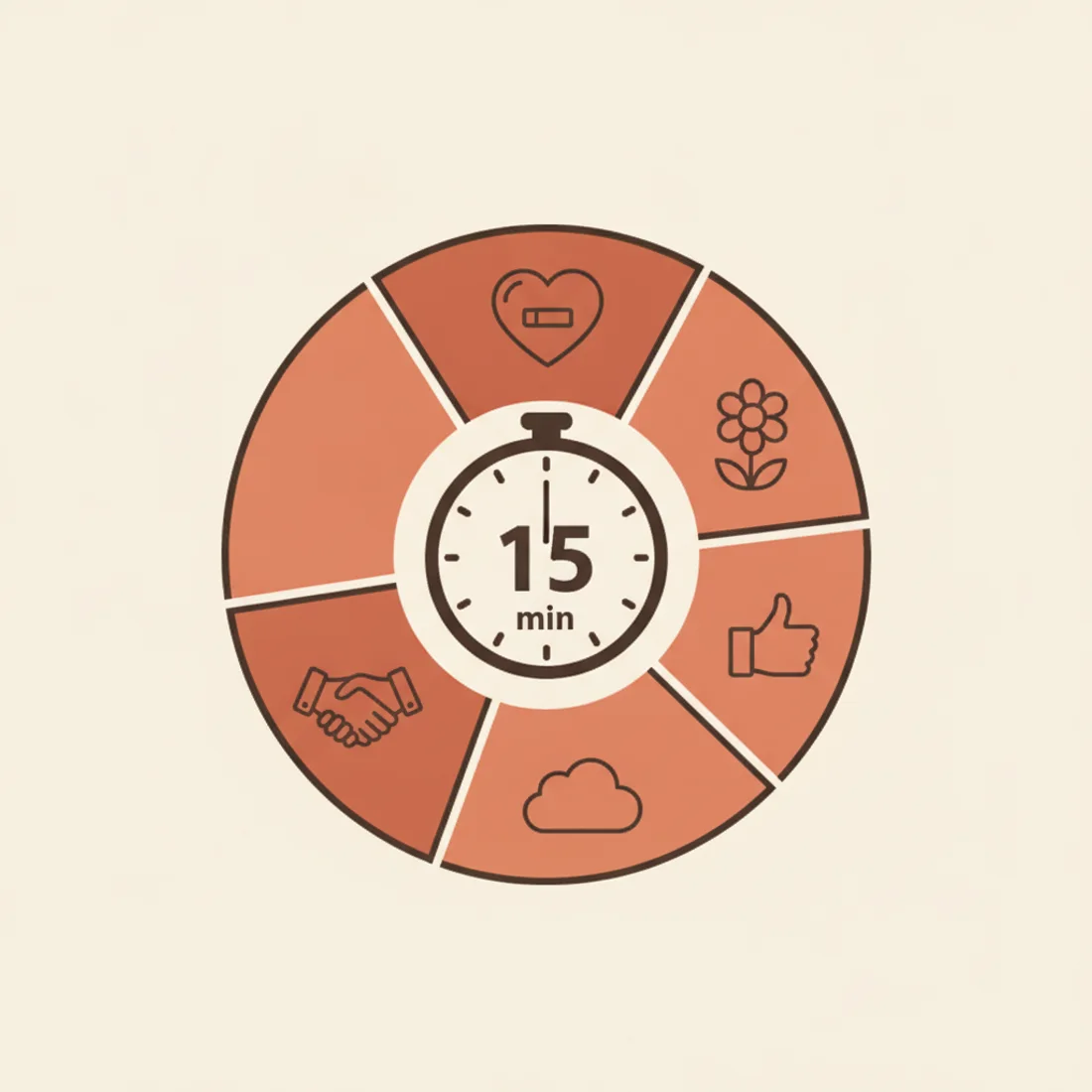
To reconnect with your partner after a baby, lower the bar and raise the frequency: aim for a few minutes of real attention every day, one short weekly meeting to share the load, and one small pocket of time for the two of you. The early months of parenthood take almost everything you have. It is normal for the relationship to move to the back seat, and it is possible to bring it forward again without needing extra time you do not have.
Why it feels different after a baby
A baby changes more than your schedule. Common shifts include:
- Sleep debt. Tired people are less patient, less playful and less generous in how they read each other.
- A new division of labor. Even couples who split everything evenly before often fall into uneven roles without discussing it.
- Less spontaneous time. Conversations happen in fragments between feedings, naps and bedtime.
- Different experiences of the same days. One of you may be at home with the baby while the other is at work, and each can feel the other does not fully understand.
- Changes in how you see each other. You are now also co-parents, and the role can crowd out the couple.
Knowing these patterns helps you treat the distance as a situation to solve together, not a flaw in either of you.
Start with a realistic goal
Do not aim for date-night perfection. For the first stretch, think in these units:
| Unit | What it looks like | Time |
|---|---|---|
| Daily touchpoint | A real question, a hug, or a moment to say thank you | 2–5 minutes |
| Weekly check-in | Share what is going well and what is hard, and adjust the plan | 15–30 minutes |
| Pocket of time | A short window when the baby is asleep or with a trusted adult | 30–60 minutes |
These units add up. Even with a newborn, you can do the first two almost every day.
6 ways to reconnect after a baby
1. Create a 5-minute ritual
Pick a moment that already exists: after the baby falls asleep, while the kettle boils, or during the evening feed. Ask one question each and listen without fixing. Good ones for this stage:
- What was the hardest part of your day, and what was the best part?
- What do you need from me tomorrow?
- What is one thing I did today that helped?
2. Say the appreciation out loud
Exhausted couples often keep a silent tally of who did more. Counter it by naming what the other did, in specific terms: "Thank you for taking the night shift. I know you were wiped out." Small, specific thanks cost nothing and change the tone of the day.
3. Hold a short weekly meeting about the load
Resentment tends to grow in the gaps between what each person thinks they are doing. Once a week, sit down for 15 to 30 minutes and cover:
- What went well this week as a team.
- What felt heavy for each of us.
- Which tasks are changing next week and who owns them.
- One thing we will each do for ourselves.
Include the invisible work: remembering appointments, buying the next clothing size, planning meals, answering messages from family. Naming it makes it shareable.
4. Protect small pockets for the two of you
You do not need a night out. Put a few windows on the calendar, even if they are short: a walk with the stroller where phones stay in pockets, a coffee on the porch while the baby naps, or twenty minutes after bedtime. If you have a trusted family member or friend, ask for an hour now and then. For ideas, see date night ideas at home after the kids go to bed.
5. Keep affection simple and non-pressured
A hug that lasts a few extra seconds, a hand on the shoulder or sitting close on the couch keeps physical warmth alive without adding pressure. Talk openly about what feels good, what does not, and what each of you has the energy for right now. Physical recovery and hormonal changes affect everyone differently, so patience matters; if you have questions about your body, ask your healthcare provider.
6. Repair quickly
You will snap at each other. That is normal when you are short on sleep. What matters is returning to each other afterward: "I was short with you earlier. I am sorry. I was overwhelmed, and it was not about you." Learning a few repair phrases in advance helps, as does agreeing on a signal for "I need a pause." See couples communication exercises for a script you can try.
What not to do
- Do not compare tiredness. Contests about who is more exhausted rarely end well.
- Do not save every serious topic for the end of the day. Late-night problem-solving goes badly when both of you are depleted. Set a time when you are both a little fresher.
- Do not wait for the baby to sleep through the night. Connection grows in small habits you start now, not in a free calendar later.
- Do not assume you know what your partner needs. Ask.
When it is more than tiredness
If low mood, worry, irritability or numbness lasts more than a couple of weeks, or if either of you has thoughts of self-harm, speak with a doctor or midwife. Postpartum depression and anxiety are common and treatable, and they can affect either parent. In the US, the National Maternal Mental Health Hotline (1-833-852-6262) is free of charge, confidential and open 24 hours a day. In an emergency, call 911 or 988.
A framework for busy parents
You can reconnect with only the tools you already have, but structure helps when you are tired. Closer — The Couples Workbook includes 30 weekly check-ins that take about 15 minutes each, 30 guided difficult conversations that cover topics like household chores, the mental load, kids and parenting style, time with friends and time alone, and a set of pocket cards you can cut out: 24 for the weekly check-in and 24 with phrases for repair moments. It also has 52 date nights, a shared journal and a Busy Weeks and Long-Distance Edition with a five-minute phone check-in for those weeks when you are out of sync.
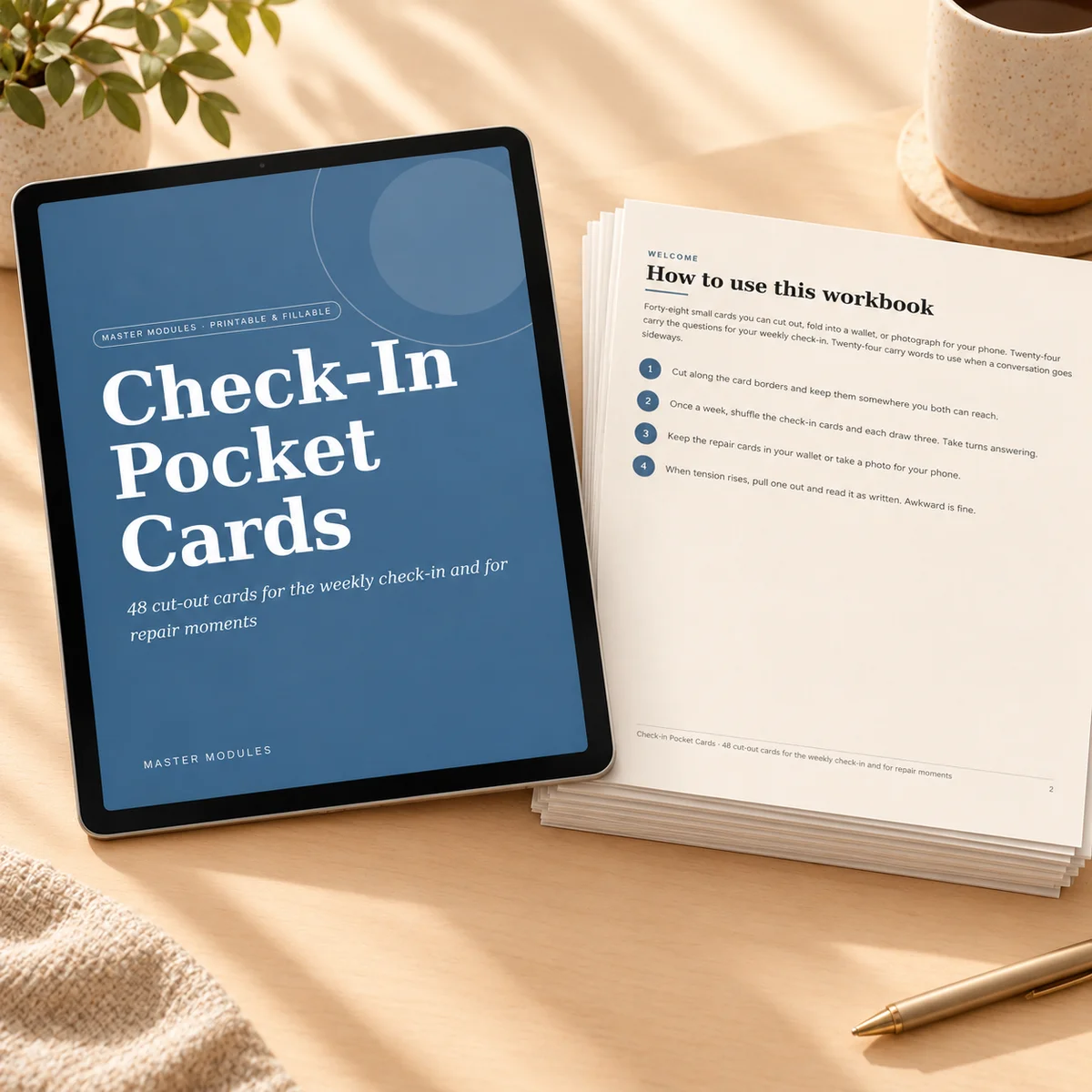
The workbook is a general couples workbook, not a parenting-specific one. A separate optional add-on, Closer as Parents Pack, focuses on parenting questions in more depth and is sold separately.
For general ideas that work with or without a baby, read how to reconnect with your spouse and relationship check-in questions.